Fashion Retail Experience: Omnichannel, Phygital & Personalization Strategies to Boost Loyalty and Sales
Fashion retail experience is evolving fast as shoppers expect seamless, emotionally engaging journeys across channels. Brands that blend digital convenience with thoughtful in-store moments win loyalty and higher spend. Below are practical strategies to elevate the fashion retail experience and measurable ways to track success.
Design a true omnichannel journey
– Make shopping continuous: let customers start on mobile, continue in-store, and finish at home without friction. Offer unified carts, saved favorites, and consistent product information across touchpoints.
– Synchronize inventory: show real-time stock levels online, enable buy-online-pickup-in-store (BOPIS), reserve-in-store, and same-day delivery where feasible. Reduced friction here directly lifts conversion and reduces returns.
Embrace phygital interactions
– Use technology to enhance physical shopping: QR codes, smart mirrors, and mobile checkout speed up service and provide richer product details.
– Try augmented reality (AR) for virtual try-ons or mix-and-match styling stations so shoppers experiment without commitment. These tools increase engagement and average order value.
Hyper-personalization without creepiness
– Personalize product recommendations, promotions, and home-page content based on behavioral signals, past purchases, and expressed preferences.
– Balance personalization with transparency: allow customers to control data use and offer clear benefits (better recommendations, exclusive drops) in exchange for sharing preferences.
Prioritize experiential retail
– Create moments that can’t be replicated online: styling workshops, limited-edition product launches, and curated pop-ups deepen emotional connection.
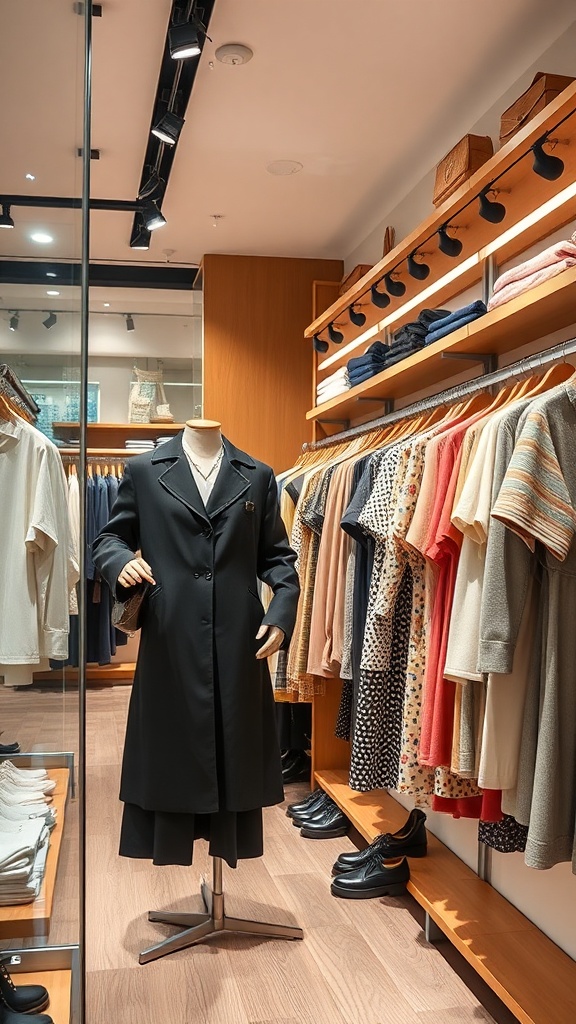
– Design stores that encourage exploration—thoughtful sightlines, tactile displays, and flexible layouts for rotating activations. Experience-driven spaces increase dwell time and social sharing.
Sustainability as an experience differentiator
– Communicate product provenance, material choices, and lifecycle options clearly at point of sale.
Visible actions—repair services, take-back programs, and recyclable packaging—turn sustainability into a competitive advantage.
– Offer product repair clinics or trade-in credits to encourage circular behaviors and build long-term loyalty.
Optimize checkout and returns
– Fast, flexible checkout options (contactless payments, mobile POS, express lanes) reduce abandonment.
– Simplify returns with clear policies, prepaid labels, and in-store drop-off. Easy returns are a major trust signal for fashion shoppers.
Train staff as brand ambassadors
– Equip associates with product knowledge, styling skills, and device access to inventory and customer profiles. Empowered staff convert browsers into buyers and create memorable service moments.
– Incentivize measured behaviors like stylist consultations and membership sign-ups to reinforce desired experiences.
Measure what matters
– Focus on metrics that reflect experience impact: conversion rate, average order value, repeat purchase rate, net promoter score (NPS), and dwell time.
– Use qualitative feedback—in-store interviews, social listening, and post-purchase surveys—to surface pain points and inspiration for new activations.
Test, iterate, scale
– Run small experiments: a pop-up layout, a new return flow, or a loyalty perk. Monitor lift, gather feedback, and scale winners quickly.
– Keep change cycles short; shoppers’ expectations shift rapidly, and agility maintains relevance.
Elevating the fashion retail experience is a continuous blend of empathy, operational excellence, and creative risk-taking.
By making shopping seamless, personal, and memorable, brands can turn transactions into lasting relationships.